A stump in the middle of a lawn is an awkward thing. You mow around it, you trip over it, and every spring it throws up a fresh crop of shoots that makes you feel you have achieved nothing at all. The tree is gone; the stump has other ideas. The two standard fixes — grinding it out, or removing it entirely — both work, but they leave you with very different gardens afterwards. The trick is matching the method to the space you want back.
What Each Method Actually Involves
Stump grinding
Grinding is the gentler option as far as your garden is concerned. A machine with a spinning toothed wheel on a swinging arm is wheeled or tracked up to the stump, and the operator sweeps the head side to side and downwards, chewing the wood into chips as it goes. Smaller machines will fit through a narrow garden gate; larger ones need a metre or more of clearance.
The aim is to take the stump down to below ground level — usually somewhere around 15–30cm, depending on the machine and what you plan to do with the space. A modest stump takes minutes. A big one with heavy buttress roots can take an hour or two, with breaks to clear chips out of the way.
What grinding does not do is remove the roots. The bulk of them stay exactly where they are, rotting slowly in the soil. Depending on the species and the ground, that decay can take a few years or a few decades.
Full stump removal
Removal — sometimes called extraction or pulling — means taking the stump and the main roots out of the ground. It might be done with a winch and a cutting edge, a small excavator, or, for a modest stump in soft soil, a mattock, a spade and a stubborn afternoon. The result is a hole, often a surprisingly big one, plus a pile of roots and soil that has to go somewhere.
Mess, Disruption and Your Lawn
Grinding leaves a heap of chips roughly where the stump was, a shallow crater, and a ring of soil debris. Most operators will rake the chips into a pile for you or take them away, and the crater is easy to backfill. Grass around the stump is usually bruised rather than destroyed.
Removal is a heavier job. Expect a large excavation, spoil heaps, and often machinery tracks across the lawn. Tight access makes it slower and more expensive, and there is more chance of knocks to fences, beds and paving along the route.
Cost: What You Are Really Paying For
As a rule, grinding costs less than full removal. It is faster, uses less labour and produces far less material to dispose of. Removal can cost several times as much for the same stump, because it involves excavation, machinery, hauling away soil and timber, and making good afterwards.
Within grinding, the price usually depends on:
- the diameter of the stump at ground level, including buttress roots
- how deep you want it ground — deeper takes longer and costs more
- access: how close a machine can get, and what it has to cross to get there
- how many stumps are being done in one visit
- whether the chips are left on site, raked into beds or taken away
Get two or three written quotes and ask what is included. Chip removal, backfilling, a stump-killer treatment and VAT are the usual extras, and they are far easier to discuss before the machine is on your drive than afterwards. If money is tight, it is worth asking whether a neighbour also has a stump to grind — two jobs in one visit often works out cheaper per stump.
Replanting: What You Can Do With the Space
After grinding, you can replant, with a bit of preparation. Dig the chips out of the planting hole rather than mixing them in, as fresh woodchip ties up nitrogen while it breaks down, and backfill with good topsoil. The chips themselves make a perfectly decent surface mulch around established plants, kept a little clear of stems and trunks.
One caveat: some species regrow from roots left in the ground. Poplar, willow, cherry, sycamore, buddleia and Leyland cypress are the usual offenders. If you grind one of those, expect shoots and be ready to deal with them, either by mowing them off regularly or by treating the regrowth with a stump and root killer, following the label exactly and keeping it away from other plants, pets and water.
After removal, you have a backfilled hole, no regrowth to worry about, and a spot you can plant into sooner. If you are putting the same species back in the same place, though, think about soil-borne pests and diseases — rotating to a different species is usually the safer bet. Backfill also settles, so water it in and top it up before planting.
Long-Term Results and the Details People Forget
- Ground settles. Where a stump has been ground, the surface will sink as chips and roots below decay. Plan to top up with topsoil before turfing or paving, and expect to do it again in a year or two.
- Fungal disease. Decaying roots can host honey fungus, which attacks a wide range of shrubs and trees. If you have seen it nearby, or the tree died mysteriously, ask a qualified arborist before replanting in that spot.
- Services and structures. Grinding leaves roots in place. If they run close to drains, cables, a retaining wall or foundations, take advice from a qualified arborist — and a drainage specialist or structural engineer where relevant — before deciding. Removal is not automatically safer, as digging can disturb buried pipes just as easily as roots can.
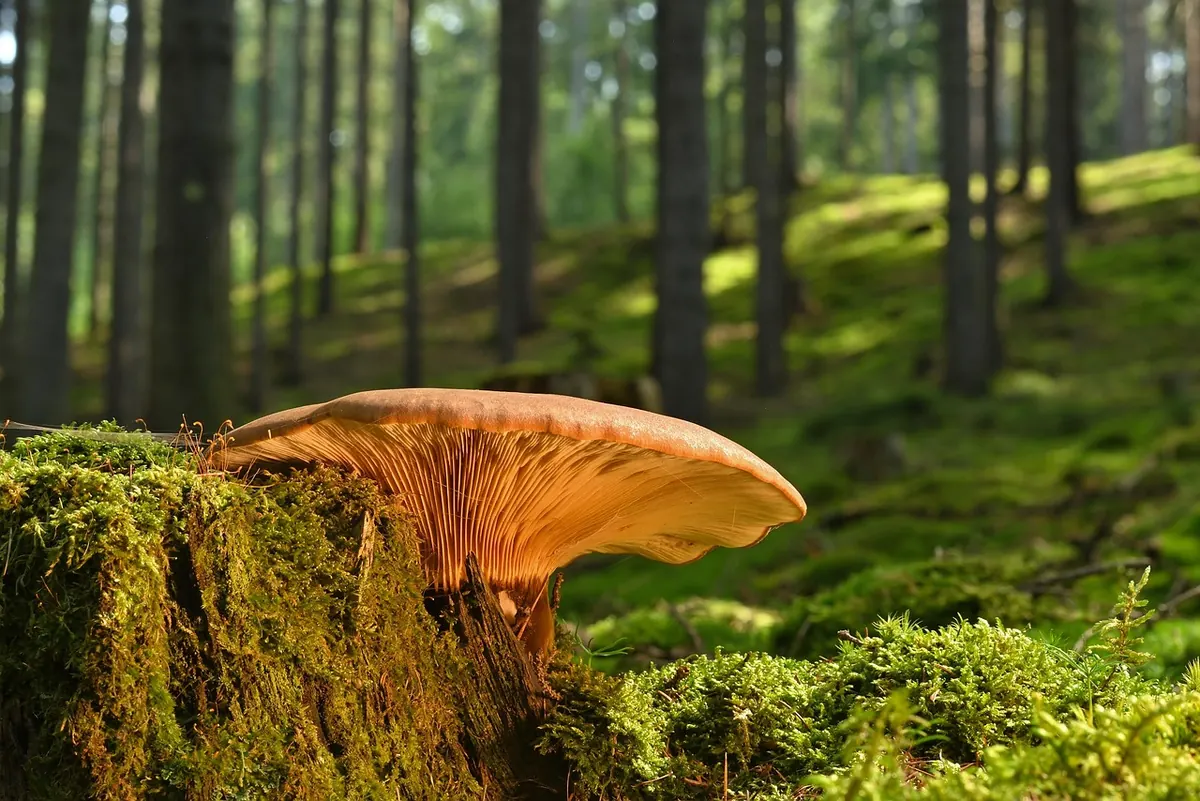
- Wildlife value. A decaying stump in a border is habitat. If you can live with it out of the way, leaving one costs nothing and supports insects, fungi and the birds that feed on them.
Which One Should
Photo: jggrz / Pixabay